loading

Shenzhen Demeng Toy Co., Ltd. focus on making custom designer toys.

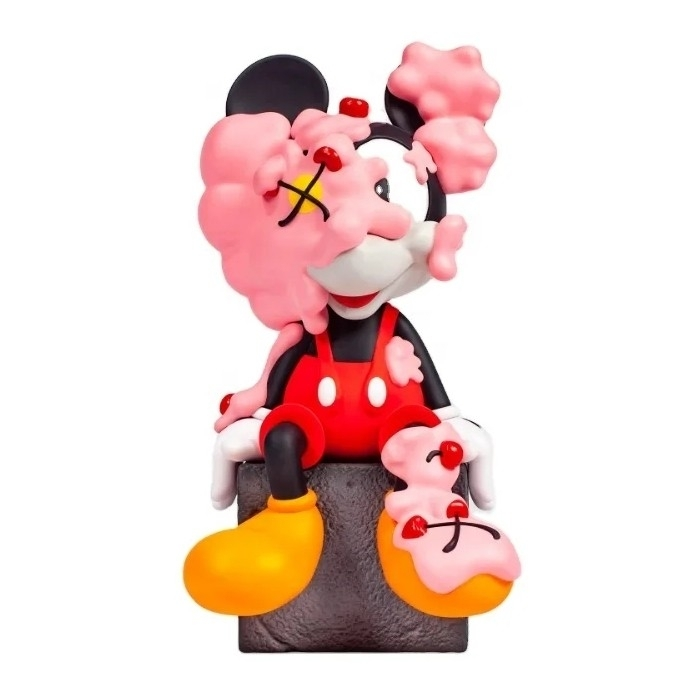
Custom Resin Casting Miniature, Pink Dissected Designer Art Toy Full Front View
Custom Resin Casting Miniature, Collectible Designer Figure Left Side View
Custom Resin Casting Miniature, Urban Art Toy Right Side View
Custom Resin Casting Miniature, Designer Resin Figurine Back View
Custom Resin Casting Miniature, Pink Dissected Designer Art Toy Full Front View
Custom Resin Casting Miniature, Collectible Designer Figure Left Side View
Custom Resin Casting Miniature, Urban Art Toy Right Side View
Custom Resin Casting Miniature, Designer Resin Figurine Back View

Resin Casting Miniature

Resin Casting Miniature Urban Art Toy Collectible Designer Figure Custom Resin Figurine For Display
Resin Casting Miniature, custom urban art toy collectible figure. Made of high quality resin with hand painted details, suitable for miniature display, desk decoration and limited edition collection.
Product Description:
This Resin Casting Miniature is a custom urban art toy collectible figure. It is made of high quality resin material, with solid structure, fine sculpt details and smooth surface finish.
The figure features a stylized mouse character with red and black color scheme, exaggerated cartoon expression and unique urban art design. The resin casting process allows precise details and stable quality for miniature display.
We support custom resin casting miniature service, including character design, sculpting, resin casting, hand painting and packaging. Suitable for art toy projects, limited edition releases, desk display and brand IP collectibles.
Key Features
  • Resin Casting Miniature, custom urban art toy collectible figure
  • Red and black stylized rabbit character with urban art design
  • High quality resin material, fine sculpt and smooth surface
  • Hand painted details with clear color and stable quality
  • Custom design, casting, painting & packaging available
5.0
Material:
Resin
Color:
Customizable (Pantone Color Matching Available)
Size:
Customizable (OEM/ODM Service for Various Scales)
Prototyping Time:
7 working days (Rush Order Available)
MOQ:
100 pcs (Bulk Discount for Large Orders)
Certificates:
CE, EN71, ASTM F963, CPSIA
design customization

    oops...!

    no product data.

    Go to homepage
    Brand Name
    Custom
    Usage
    Home Decoration, Collection, Desktop Ornament, Gift
    Packaging
    Color Box
    Weight
    Customized (Depends on Size)
    Style
    Designer resin figure, classic mouse character with pink melt deformation, cherry detail, dark pop art toy, high texture matte & glossy mixed finish
    Craft
    Resin casting, hand polishing, hand painting, pad printing

    Note:

    The toy figure images shown on our website are intended solely as references for customization and are not available for purchase. As a professional ODM/OEM toy manufacturer, we focus on customizing and producing toy figures of comparable style. If you have an original figure design you’d like to produce, please reach out to us for a quotation.

    What Resin Casting Means?

    Resin casting is a replication process: a finished master is embedded in silicone, the silicone is cured and cut open, and each production piece is poured by hand into the resulting cavity. There is no metal tool, no injection pressure and no minimum that a machine imposes. That is the whole reason a resin miniature can hold detail that an injection process cannot reach.
    Resin Casting Miniature (2)

    Product Display

    Resin Casting Miniature (3)
    Resin Casting Miniature (3)
    Resin Casting Miniature (4)
    Resin Casting Miniature (4)
    Resin Casting Miniature (1)
    Resin Casting Miniature (1)

    Six Casting Defects

    Defect 01

    Air bubbles in the surface

    Air whipped in during mixing, or trapped against the mold wall where it cannot rise. Most visible on faces, chests and any downward-facing curve.

    Control: vacuum degassing 60-120 s, plus 40-60 psi pressure pot during cure
    Defect 02

    Short shot / incomplete fill

    Resin cures before it reaches a thin extremity. Common on weapons, fingers, hair strands and any feature under about 1 mm section.

    Control: vent channels at the highest points, warmed mold, thin-stream pour
    Defect 03

    Shrinkage on joint interfaces

    PU resin loses 0.2-0.6 percent linearly, which on a 30 mm piece is enough to open a shoulder gap on a multi-part kit.

    Control: master scaled by the shrinkage factor, interference-fit joints
    Defect 04

    Seam flash on the parting line

    Resin seeps between the mold halves or along the silicone cut. Flash is removable but a seam across a face is a design problem, not a finishing one.

    Control: seam map fixed at sculpt review; parting line placed on a form change
    Defect 05

    Detail loss across a run

    Silicone degrades gradually. The first symptom is not a failed cast but softly rounded edges and a dull fine texture, usually after 40-60 pulls.

    Control: rated pull count recorded, mold replaced on schedule not on failure
    Defect 06

    Sticky or amine-bloomed surface

    Off-ratio mixing, cold workshop or insufficient cure time leaves an uncured surface that repels paint and attracts dust.

    Control: weighed mix ratio, cured at 25 C or above, 24 h before handling


    How the cast is built, step by step

    StepWhat happensWhat it controls
    Sculpt and master3D sculpt built to your reference, then printed at high resolution and hand finishedEvery detail the cast can ever hold
    Master finishing and seam mapSurface polished, the parting line position decided and marked on the modelWhere the seam will land on the finished piece
    Silicone mold buildMaster suspended, silicone poured and cured, then cut into a block or two-part moldWhich detail survives, and the mold's pull count
    Resin mixing and degassingTwo-part PU weighed by ratio, mixed, then vacuum degassed to pull the entrained airSurface bubble count
    Pour and pressure cureThin-stream pour with mold tilt, then 40-60 psi in a pressure pot until setTrapped air in undercuts and fine features
    Demold and trimPiece released, gates and flash cut back, seam sanded to the intended lineEdge sharpness and seam visibility
    Inspection100 percent inspection at small editions, AQL sampling at larger runsWhether the run you receive matches the approved cast
    Prime or paintNeutral primer for unpainted stock, or the full paint route to an approved paint masterWhether the buyer's brush or our paint reads the detail


    Material Comparison

    Resin systemBest forShrinkageCharacterWatch out for
    Epoxy resinClear or translucent castings, display pieces with a glass-like finish0.1-0.5%Longer cure, lower shrinkage, excellent clarity, harder finished surfaceSlow cycle limits it to small runs; harder means more brittle at thin extremities
    Filled resin (metal or stone powder)Cold-cast bronze, stone and marble effects on display miniatures0.3-0.8%Real weight and a convincing material feel; can be polished or patinatedHeavier and more abrasive to the mold, which shortens pull life; not for tabletop handling
    Polyester resinBudget display castings and large simple forms0.5-2.0%Cheapest per kilo and fast settingStrong styrene odor, higher shrinkage, more brittle. We do not recommend it for a 30 mm face
    UV resin (SLA master only)Printed masters, not production castsNegligibleVery high resolution, so the master captures detail the cast can then reproduceNot suitable as a sold piece: it is brittle and degrades in sunlight, so it is a means to a master
    Rotocast vinyl (for comparison)150 mm and above, single-piece hollow figures1.5-2.5%Lighter, hollow, drop resistant, cheaper at volume above roughly 300 piecesSofter surface detail and visible mold seams; not the right route for a 30 mm face


    Process Comparison

    ProcessToolingEconomic fromDetail ceilingBest use at miniature scale
    3D printing, direct outputNo mold1 pcVery high, with visible layer texture unless post-processedSamples, masters, and genuinely one-off pieces. Not viable as a production route above a handful of units
    Injection PVC or ABSUSD 12,000-40,0001,000-2,000 pcsGood, but limited by flow and by draft angle requirementsHigh-volume play or toy lines. Not a miniature route below 1,000 pieces
    Rotocast vinylUSD 3,000-8,000100-300 pcsModerate: soft surface, visible seams, wall thickness limits fine featuresLarger hollow figures above 150 mm. Cheaper than resin above roughly 300 pieces
    Metal casting (pewter, white metal)USD 800-3,00050-100 pcsHigh, with a characteristic soft metal lookTraditional tabletop miniatures, where weight and metal feel are the point
    Resin printing at volumeNo mold1 pc, but slow per unitVery highShort runs where consistency matters more than unit cost; usually superseded by casting above a few dozen


    MOQ — Why Silicone Makes 30 Pieces Possible

    Tier 1 · Master and Test Cast
    1-5 pcs
    USD 120-620. One printed master and one test cast so you can hold the actual surface and check the seam before committing to a mold.
    Tool: printed master, no production mold
    Tier 3 · Standard Run
    100-499 pcs
    USD 5.50-24.00 per piece. Our standard figure. At 300 pieces and above the run needs two to four molds from the same master, quoted as separate lines.
    Tool: multiple silicone molds
    Tier 4 · Production Edition
    500-3,000 pcs
    USD 3.20-14.00 per piece. Still cast, but at this volume we will quote rotocast vinyl or injection alongside it, because they may be cheaper per unit.
    Tool: silicone, or re-quote on vinyl

    Production Process & Timeline

    The production cycle of this custom toy is about 2-3 months. The process is divided into 3 core stages, with the steps and timeframes for each stage as follows:
    1. Pre-design & Sampling Stage

      Including 2D design, 3D modeling, 3D printed sample, and colorful prototype production, taking 5-11 days in total;
    2. Mold & Mass Production Preparation Stage

      Including mold solution finalization, mold making, and mass production, taking 35-42 days in total;
    3. Post-processing & Delivery Stage

      Including color painting, assembling, Q-C (quality control), packaging, and delivery, taking 14-22 days in total.                                                          
    20251231-104507

    FAQ

    1
    What exactly is resin casting as a miniature production method?
    Resin casting is a replication process, not a molding process in the tooling sense. A finished master is suspended in a silicone block, the silicone cures around it and is cut open, and each production piece is then poured by hand into the resulting cavity as a two-part liquid resin that cures rigid. There is no metal tool and no injection pressure. The consequence is that the same master can go from approval to a first sellable cast in a few days, and the surface detail is limited only by the master and the silicone, not by what a steel tool can flow. The trade-off is labor: every piece is poured, demolded, trimmed and inspected individually, so unit cost falls with volume far more slowly than on an injection process.
    2
    What scale and size counts as a miniature for resin casting?
    We run resin miniatures from 28 mm tabletop gaming scale up to about 150 mm display figurines, which covers the range where hand casting stays economic and detail stays legible. At the small end, a 28 to 32 mm figure is roughly 30 to 35 mm tall including its base, and detail at that size has to be designed with the paint in mind rather than the sculpt alone. At the large end, 120 to 150 mm is where a resin piece starts competing with rotocast vinyl, and resin wins on surface detail while losing on weight and drop resistance. Above roughly 200 mm the silicone mold size and the resin volume per cast start to make rotocast vinyl the better route unless the piece is a sectional kit.
    3
    Why do resin casts have air bubbles, and how do you prevent them?
    Bubbles come from three sources and each has its own fix. Air whipped into the resin during mixing is removed by vacuum degassing the mixed resin for 60 to 120 seconds before pouring. Air trapped in the mold cavity, especially in undercuts and thin extremities, is handled by pouring in a thin stream, tilting the mold, and using a pressure pot at 40 to 60 psi during cure, which compresses any remaining bubble until it is invisible. Air drawn in at the mold seam or through a thin section is a mold design issue, fixed with vent channels at the highest points. A supplier who quotes low-cost casting without stating a degassing and pressure step is telling you where the bubbles will show up, which is usually the face.
    4
    How many casts can one silicone mold make?
    A platinum-cure silicone mold typically yields 30 to 80 pulls before the cavity surface starts to degrade, and the degradation shows first as a loss of fine detail and a dulling of sharp edges rather than an obvious failure. Tin-cure silicone runs shorter and is cheaper. That is why a resin edition is genuinely limited by the tool rather than by a marketing claim: a 50-piece numbered edition in a single mold is a coherent product, while a 300-piece edition needs three to four molds made from the same master, and we quote those as separate tooling lines so the edition cost is visible. We record the rated pull count for each mold and replace on schedule rather than waiting for visible degradation.
    5
    What are the lead time and pricing structure for a resin miniature run?
    Total production runs 54-75 working days, though a small silicone edition can complete much faster once the master is approved, because mold making is 3 to 6 days rather than 12 to 18. The stages are: reference and 3D sculpt in 5-11 days, printed master and prototype approval in 7 working days, silicone mold making in 3 to 6 days, casting and painting in 20 to 30 days depending on quantity, and QC and packing in 5 to 10 days. Sea freight adds 25-40 days and air freight 3-5 days.
    Get in touch with us
    Just leave your email or phone number in the contact form so we can send you a free quote for our wide range of designs!
    Related Products
    ADDRESS
    Dongjia International 1315, No.19 Longgang Road, Longgang District, Shenzhen, Guangdong Province, China.
    Contact us
    wechat
    whatsapp
    Contact customer service
    Contact us
    wechat
    whatsapp
    cancel
    Customer service
    detect