




Small Batch Custom Toy
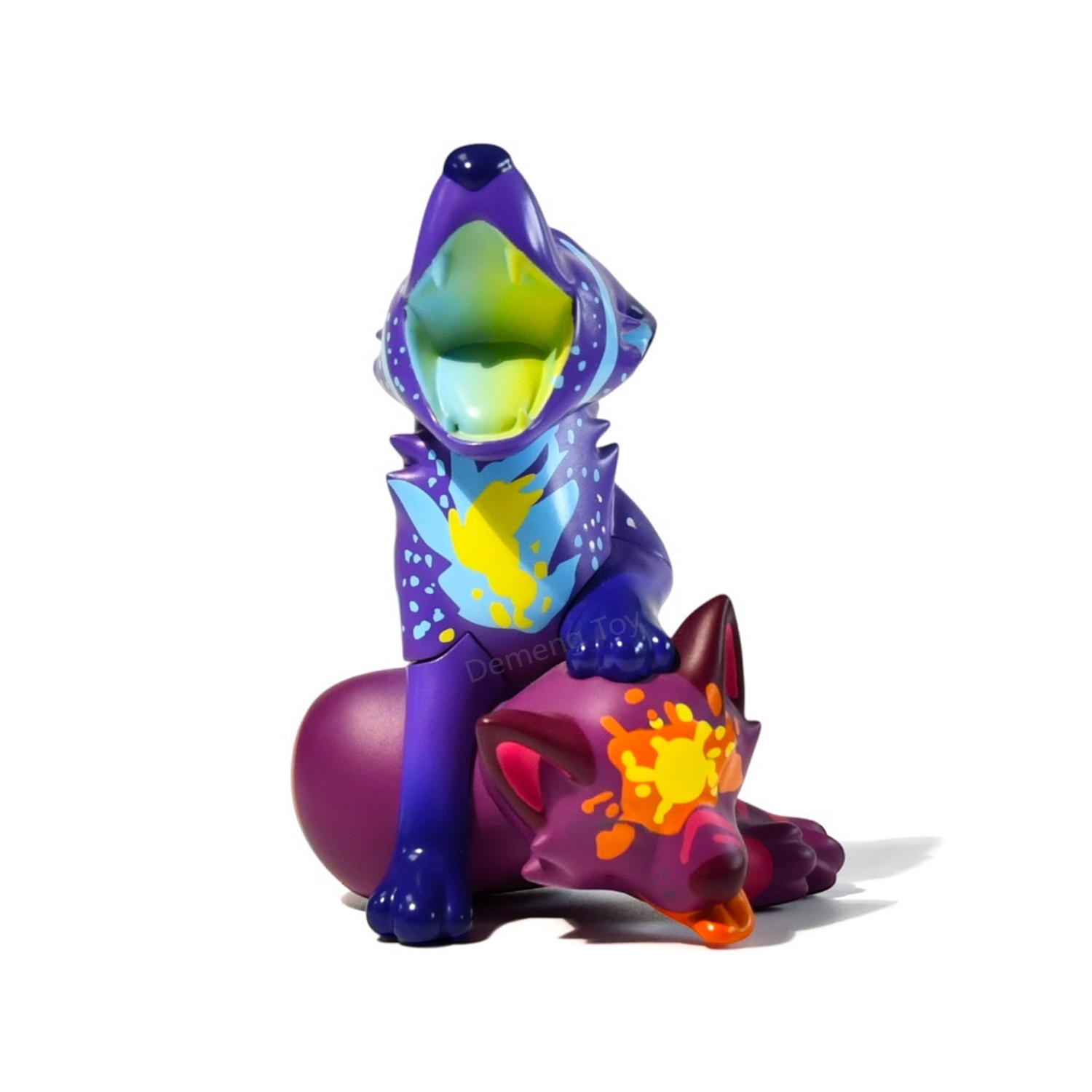
- Small Batch Custom Toy, limited edition designer vinyl figure
- Colorful monster character with vibrant purple and blue paint
- High quality vinyl material, solid structure and smooth surface
- Hand painted details, unique splash paint and clear sculpt
- Small batch production, sample development & numbering available
Note:
The toy figure images shown on our website are intended solely as references for customization and are not available for purchase. As a professional ODM/OEM toy manufacturer, we focus on customizing and producing toy figures of comparable style. If you have an original figure design you’d like to produce, please reach out to us for a quotation.
What Makes a Batch Small?
Product Display
Who runs a small batch, and what they are testing
| Reason | Batch size | What it is actually testing |
|---|---|---|
| Market test | 30-99 pcs | Whether the character sells at all, before any real money is committed |
| Art fair or exhibition | 30-150 pcs | Whether it sells at a premium price point in person |
| Kickstarter or crowd sale | 30-300 pcs | Whether demand reaches the next funding tier |
| First brand release | 100-300 pcs | Whether the brand can hold a sellout without a full retail commitment |
| Licensing window | 100-500 pcs | Whether you can get something to market inside the license period |
| Colorway test | 30-100 pcs per color | Which color holds at full price before you commit to a full run |
Tooling Families — the Batch Size Picks the Tool
SLA master, direct output
A 3D printed master finished by hand and used directly as the display piece. No mold at all. This is how a concept gets proven before any tooling exists.
Silicone mold
An SLA or cast master replicated in a silicone block, hand cast piece by piece. Lowest tooling cost of any replicating route and the standard choice for a micro batch.
Aluminum rotocast mold
The standard small batch tool. Rotational casting gives a hollow, soft-shell vinyl piece with a good surface, and the tool survives a real production run.
Hardened steel injection mold
Built for volume, not for small batches. Drops the unit price to its floor but only reaches an acceptable tooling share above roughly 500 to 1,000 pieces.
Material Comparison for a Small Batch Custom Toy
| Material | Small batch tooling | Unit at 30 pcs | Unit at 300 pcs | Small batch verdict |
|---|---|---|---|---|
| Rotocast vinyl (soft vinyl) ★ | Aluminum tool USD 3,000-8,000, or silicone USD 400-1,500 for micro runs | USD 28-44 | USD 5-9 | The only route with a viable tool at every batch size. Silicone carries 30-99, aluminum carries 100-8,000. This is why vinyl dominates the small batch category. |
| PU resin, cast | Silicone tool USD 400-1,500 | USD 22-40 | USD 8-16 | Best surface detail available at a small batch and the cheapest way to get a micro batch made. The tool is a consumable with 30-80 pulls, so budget replacements into the edition size. |
| PVC plastisol (soft PVC) | Silicone or aluminum USD 400-7,000 | USD 18-32 | USD 3.50-7 | Cheapest small batch unit cost and the lowest tooling of any replicating route. Surface detail is the trade-off, so it suits simpler silhouettes and promotional work. |
| Injection PVC | Steel tool USD 12,000-35,000 | Not viable | USD 4-9 | Not a small batch material. The steel tool is the point of the process, and at 30 pieces it would take an entire year of production to amortize. Above 1,000 pieces it becomes the right answer. |
| ABS | Steel tool USD 14,000-40,000 | Not viable | USD 5-12 | Same limitation as injection PVC, and worse because every articulation is a separate tool. Use it only as an accessory or joint component inside a vinyl batch, not as the main body. |
| Plush | Pattern and die USD 600-2,500 | USD 14-30 | USD 7-16 | Viable at every batch size because sewing needs no mold, but it is labor-bound so the unit price barely improves with volume. Volume discounts are the weakest of any route here. |
Application Scenarios for Small Batch Custom Toys
Market tests for a new character
30 to 99 pieces to learn whether the design sells before committing to a real production budget.
Art fairs and gallery drops
A numbered micro batch that can be carried to the show and sold in person at a premium price.
Kickstarter and crowd sales
A finished piece for campaign photography and backer tiers, sized to the funding target rather than a forecast.
First releases for a new brand
100 to 300 pieces that let a brand claim a sellout without a full retail commitment.
Colorway and variant testing
Three colors at 30 pieces each instead of one color at 300, so the data is about color rather than volume.
Licensing windows
A short run that gets product to market inside a license period that a full production cycle would miss.
Concept store exclusives
Small exclusive runs for a single retailer, restockable from a tool you already own.
Event and convention editions
A dated, numbered batch tied to a specific show, where the scarcity is part of the product.
Brand gift and VIP programs
A few dozen pieces at gift-standard quality, where the batch is small because the recipient list is.
Artist editions
Hand-finished and hand-numbered runs where the artist signs off on every piece.
Proof of concept for a licensee
A physical sample batch to put in front of a licensor or a distributor before signing.
Restock of a sold-out drop
30 pieces and up against an existing tool, which is what makes a small first batch safe to attempt.