




Monster Art Toy
Note:
The toy figure images shown on our website are intended solely as references for customization and are not available for purchase. As a professional ODM/OEM toy manufacturer, we focus on customizing and producing toy figures of comparable style. If you have an original figure design you’d like to produce, please reach out to us for a quotation.
What Is a Monster Art Toy?
A monster art toy is a designer collectible built around a creature — a kaiju, cryptid, demon, or absurd mashup — where the appeal comes from character personality and surface drama rather than realism. Think of the lineage that runs from Japanese kaiju sofubi (Godzilla-era soft vinyl monsters, hand-painted in small runs since the 1960s) to today's designer monster scene, where artists drop limited colorways of the same sculpt like record labels drop singles.
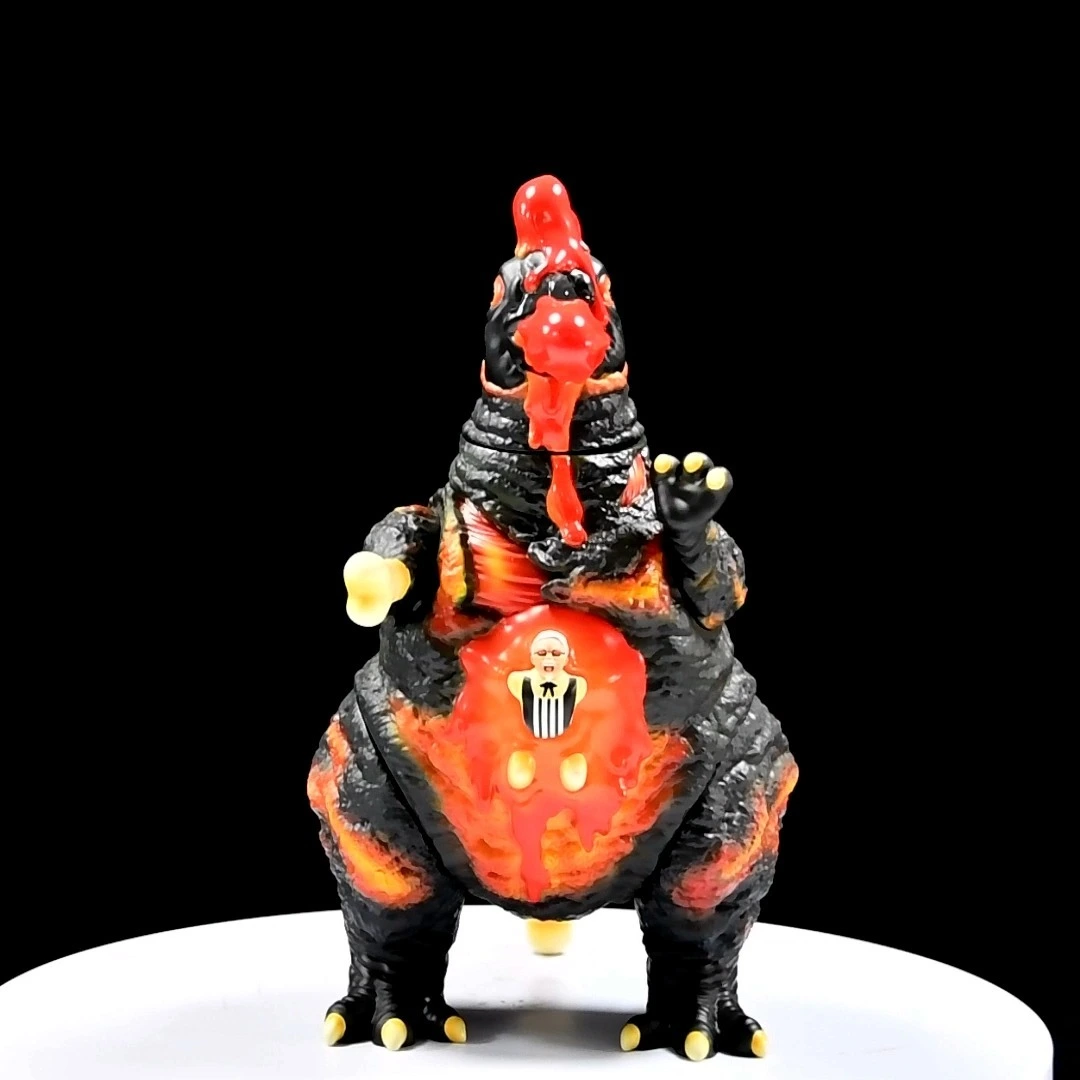
What separates a custom monster art toy from an ordinary monster action figure is authorship. Each design carries a signature silhouette and texture story: cracked lava skin, overlapping scales, matted fur, or an unexpected hybrid — like a Godzilla-frame body wearing a rooster head with a grumpy human portrait embedded in its chest. The weirder and more specific the character, the stronger the collector demand.
As a dedicated monster figure manufacturer, we produce your creature at gallery-display quality: exaggerated proportions that stand stable, skin textures sculpted into the mold (not just painted on), and effect finishes — glossy lava gradients, glow-in-the-dark accents, translucent body parts — that make each monster art toy read as a small sculpture rather than a toy.
Product Display
Material Comparison: Vinyl vs PVC vs Resin
For a custom kaiju vinyl figure, material choice decides how well your creature's texture and silhouette survive production:
| Property | Vinyl (Recommended) | PVC | Resin |
|---|---|---|---|
| Skin texture fidelity | Excellent — rotocast molds capture deep scales, lava cracks and wrinkle detail | Good — sharp detail, slightly shallower texture | Best — museum-level micro detail |
| Effect finishes | Ideal for gloss-matte contrast, glow, translucent and flocked monster skin | Good for standard gradients and metallics | Excellent paint adhesion, limited flex effects |
| Large tails / horns / claws | Hollow rotocast bodies tolerate flex without snapping | Rigid — thin spikes can snap on impact | Most brittle at thin protrusions |
| Unit cost at MOQ 100 | $4.0-$9.0 | $3.5-$8.0 | $8.0-$14.0+ |
| Best for | Kaiju sofubi, designer monsters, colorway drops | Mass-market monster figures, retail toy lines | Gallery statues, artist proofs, large 1/6 creatures |
Our recommendation: rotocast vinyl is the canonical monster art toy material — it is what Japanese kaiju sofubi has used for decades because hollow-cast bodies keep big, heavy monsters affordable and shipping-friendly, while the slightly soft surface feels alive in hand. Reserve resin for oversized display monsters (12" and up) where weight signals quality.
Process Comparison: How Creature Designs Get Made
| Process | Rotocast Vinyl (Sofubi) | Injection PVC | 3D Print + Resin Cast |
|---|---|---|---|
| How it works | Slush vinyl in a rotating heated metal mold, hand-trimmed and painted | Molten PVC injected into steel tooling at high pressure | Direct-printed masters duplicated in silicone molds with poured resin |
| Texture capability | Deep sculpted skin, organic lava flow, hand-mixed color swirls | Consistent repeating texture, tight tolerances | Fine micro-detail, best for scales and pores |
| Tooling cost & life | Aluminum/copper kaiju molds, moderate cost, 3,000-5,000 casts | Steel tooling, high cost, 100,000+ shots | Silicone molds, lowest cost, 50-100 pulls |
| Run size sweet spot | 100-2,000 pcs — the limited edition zone | 5,000+ pcs retail runs | 10-100 pcs artist proofs |
| Turnaround | 2-3 months including molds | 3-4 months (tooling dominates) | 2-4 weeks per batch |
Monster-specific finishing workflow: after casting, your creature goes through texture-lock painting — matte basecoat, airbrushed gradients on lava veins or muscle groups, hand-painted gloss contrast on claws, teeth and eyes, then optional effects: glow-in-the-dark mouth interiors, translucent fins backed with color, or flocking for mossy, furry monsters. This finishing stage is what makes the same sculpt feel like ten different creatures across colorways.
Care & Maintenance
- Keep out of prolonged direct sunlight — UV fades lava gradients and yellows translucent vinyl over time
- Dust with a soft brush or air blower; deep sculpted texture traps dust that a cloth alone will smear
- Never use oil-based or alcohol cleaners on painted texture — they dissolve effect finishes and gloss contrast
- Display away from heat sources (radiators, amp tops); rotocast vinyl softens and can slump above ~60°C
- Handle hollow-bodied monsters by the torso, not by tails or horns, to avoid stress-whitening the vinyl
- Store numbered editions in their original box with the COA — intact packaging protects resale value of limited runs