




Designer Art Toy Manufacturer
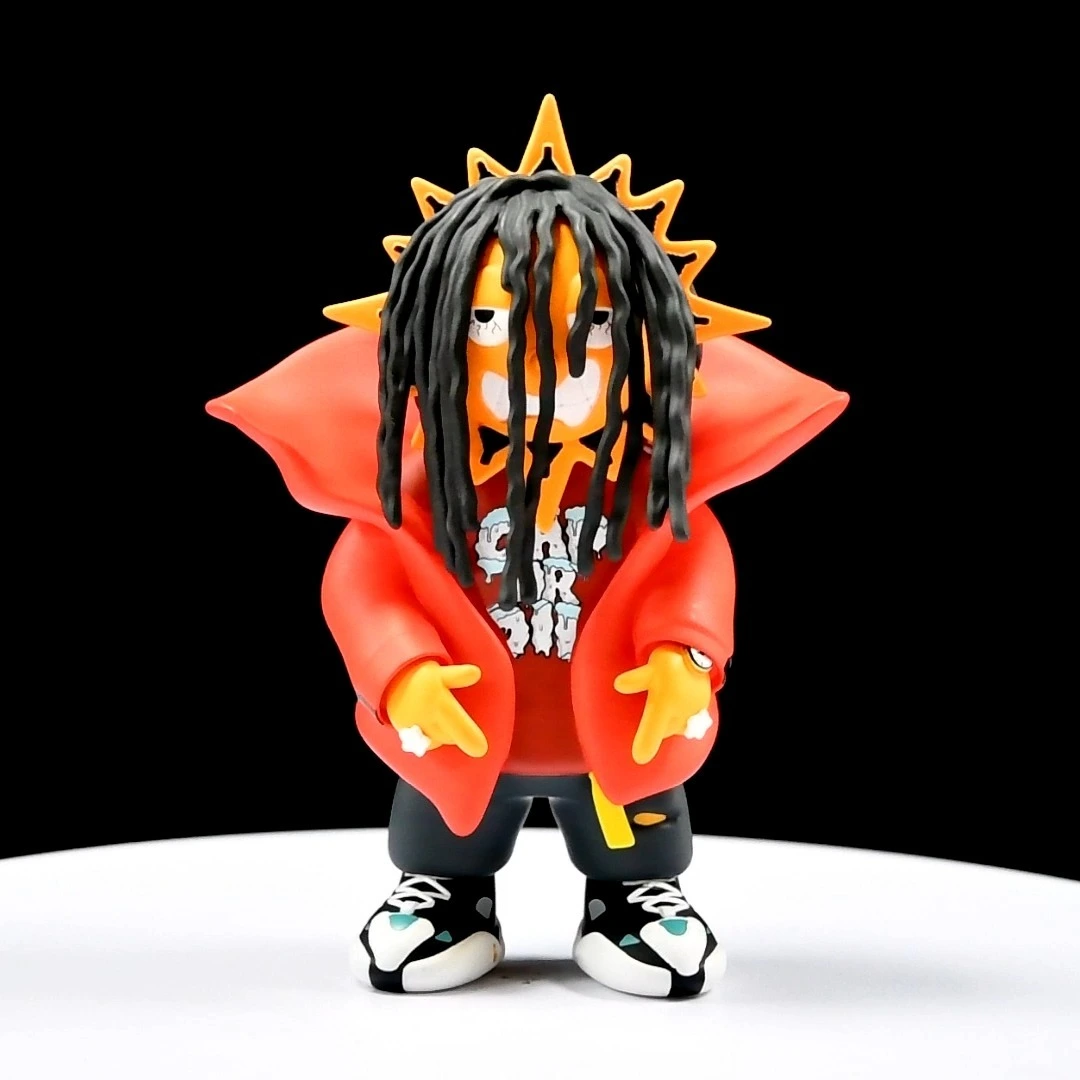
- Designer Art Toy Manufacturer, custom urban vinyl figure supplier
- OEM ODM service for anime character sculpture and brand IP collectible
- High quality vinyl material with hand painted details
- Bold urban street style with exaggerated character design
- Custom design, size, color, logo & packaging available
Note:
The toy figure images shown on our website are intended solely as references for customization and are not available for purchase. As a professional ODM/OEM toy manufacturer, we focus on customizing and producing toy figures of comparable style. If you have an original figure design you’d like to produce, please reach out to us for a quotation.
What Counts as a Designer Art Toy — Four Tests
Product Display
Material Comparison — Vinyl, PVC, Resin, ABS and Plush
| Material | Surface detail | Tooling cost | Best route | Feel in hand | Edition ceiling |
|---|---|---|---|---|---|
| ⭐ Rotocast vinyl | Good — soft edges, deliberate surface character | $ (aluminum mold) | sofubi, platform toy, art vinyl | Light, slightly hollow, warm | 100-5,000 pcs per mold |
| Injection PVC | Very good — sharp mold seams, crisp texture | $$$ (steel mold) | Blind box, high-volume platform series | Solid, weighted, cool | 10,000+ pcs per mold |
| PU / epoxy resin | Excellent — finest detail of any route | $$ (silicone mold) | Designer resin edition, gallery piece | Heavy, dense, cold | 30-80 pulls per mold |
| ABS | Good — accepts sharp panel lines and mechanical parts | $$$ (steel mold) | Articulated art toy, mechanical character | Hard, rigid, industrial | 50,000+ shots per mold |
| Plush / mixed media | Soft — graphic quality beats sculptural detail | $$ (pattern and cutting dies) | Plush art toy, brand mascot soft line | Soft, squeezable | 300-3,000 pcs per pattern |
| 3D printed resin (SLA) | Excellent — but layer lines read under raking light | None (no mold) | Master, prototype, one-off gallery piece | Light, brittle, matte | Not a production route |
Why vinyl is still the default in the designer lane. Rotocast vinyl lets a factory produce a hollow, lightweight, slightly soft figure at low tooling cost with a surface that reads as "toy" rather than "model kit". That specific combination — cheap tooling, short runs, a finish that collectors accept with visible mold character — is what made the designer toy category possible in the first place. Resin beats it on detail, PVC beats it on cost at volume, but neither replaces it in the middle of the market.
Process Comparison — Six Production Routes
| Route | Core sequence | Tooling | Bottleneck | Typical lead time | Main failure mode |
|---|---|---|---|---|---|
| ⭐ Rotocast vinyl (sofubi / platform) | Sculpt → master → aluminum mold → rotocast → trim → hand paint → assemble | Aluminum, reusable across the run | Paint zones — each extra color is a separate masking pass | 54-75 days | Wall thickness drift causing a heavy or wobbly piece |
| Injection PVC (blind box / high volume) | Sculpt → master → steel mold → injection → trim → spray base → pad print → assemble | Steel, high cost, long life | Mold making — 20-30 days alone | 70-95 days first order | Sink marks on thick sections, weld lines at flow fronts |
| Cast resin (designer edition) | Sculpt → master → silicone mold → vacuum cast → demold → sand → hand paint → number | Silicone, consumable | Mold wear — the 60th pull is visibly softer than the 5th | 45-70 days | Bubbles and mold degradation toward the end of the edition |
| ABS assembly (articulated) | Sculpt → engineering review → steel mold set → injection → joint assembly → paint → test | Steel, multi-part mold set | Joint tolerance — the design must be fixed before tooling | 80-110 days | Loose or seized joints that cannot be corrected post-mold |
| Blind box series (8-12 designs) | Theme → 8-12 sculpts → shared mold set → injection → spray → pad print → blind pack | Steel, shared across the series | Chase ratio control and sealed packing integrity | 90-120 days | Ratio leakage — collectors identifying the chase in the case |
| Plush art toy | Graphic → pattern → cutting die → sew → stuff → detail embroidery → QC | Pattern plus cutting dies | Silhouette accuracy — plush softens every hard line | 45-65 days | Graphic fidelity loss between the flat artwork and the sewn form |
Custom Design Process— Six Steps from 2d Design to 3d Figure
- 1
Artwork intake & route lock
We receive 2D artwork, reference images, intended size and edition size. We confirm the sub-category route, the material, and the compliance target — adult collectible 15+ or children's toy.
- 2
Digital sculpt
3D modeling in ZBrush, or photogrammetry from your physical maquette. Two revision rounds are included free; a fixed per-round charge applies after that, agreed in writing upfront.
- 3
Master & color prototype
The master is printed or hand-finished, then a color prototype is produced so you can see the planned paint scheme on the actual form before any mold is cut.
- 4
Mold solution & mold making
Mold layout, parting lines and gate positions are finalized. Mold count depends on the route: one to two molds for a static figure, four to six for an articulated or complex build.
- 5
Paint master & run production
The first fully finished piece is signed off as the paint master. Every subsequent piece is judged against it, and drift pieces are culled rather than shipped.
- 6
Assembly, QC & packaging
Final assembly, per-piece QC under raking light, then packaging — polybag or blister, inner tray, printed carton, and sealed foil for blind box series.
Care & Maintenance for Designer Art Toys
1. Keep out of direct sun
UV is the main enemy. Vinyl and PVC yellow under sustained direct sun, and hand-painted color zones shift at different rates. A shelf away from a window extends display life dramatically.
2. Dust with a dry soft brush
A makeup brush or camera lens brush reaches around protrusions without abrading paint. Avoid microfiber cloths on matte finishes — they polish sheen into the surface.
3. Never use alcohol-based cleaner
Isopropyl and ethanol attack both vinyl plasticizer and acrylic paint. If a mark must be removed, use a lightly damp cloth with pH-neutral soap, then dry immediately.
4. Support the base, not the figure
Lift by the base or the body, never by an arm, horn, tail or thin accessory. Resin is the most fragile on this point — thin resin projections snap rather than flex.
5. Avoid heat sources
Rotocast vinyl softens noticeably above roughly 60°C. Keep pieces away from radiators, halogen lamps, car dashboards and window ledges in summer.
6. Handle with clean, dry hands
Skin oils and sunscreen transfer onto matte paint and resin, and the mark is often permanent. Cotton gloves for handling a limited piece is not excessive.
7. Store with padding between pieces
Vinyl and PVC plasticizer can migrate into adjacent surfaces over time. Store pieces separately in acid-free tissue or polybags, not touching.
8. Resin: watch for mold-line softening
In a long designer resin edition, pieces pulled later are slightly softer in detail. Sort your display so the sharpest pulls are the ones on show.
9. Check joints on articulated pieces
ABS joint pins loosen with repeated posing. Pose once for display and leave it; repeated cycling is what wears the fit.
10. Plush: spot clean, never machine wash
Screen-printed or embroidered detail on a plush art toy will not survive a wash cycle. Spot clean with a damp cloth and air dry away from heat.